The Essen Cathedral Treasury
Relighting of the Cathedral Treasury Museum
Place: Essen
Category: Arts & Culture, Temples & Churches
Place: Essen
Category: Arts & Culture, Temples & Churches
The Essen Cathedral Treasury
Around 850, a group centred around the nobleman Altfrid, later Bishop of Hildesheim, founded a religious community of women in the Saxon settlement of Asnide, which would later become Essen. The Essen Cathedral Treasury grew out of the liturgical life of this women’s collegiate foundation. The foundation experienced its first great flourishing in the 10th and 11th centuries, when, together with Quedlinburg and Gandersheim, it ranked among the three major collegiate foundations associated with the Ottonian imperial dynasty.
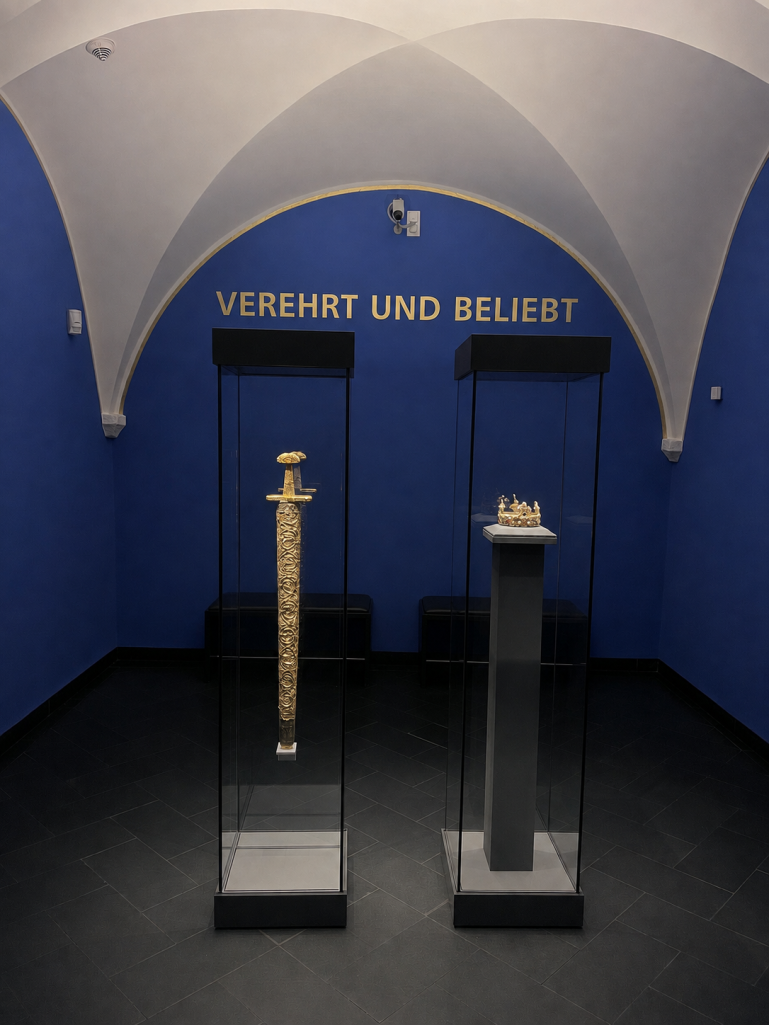
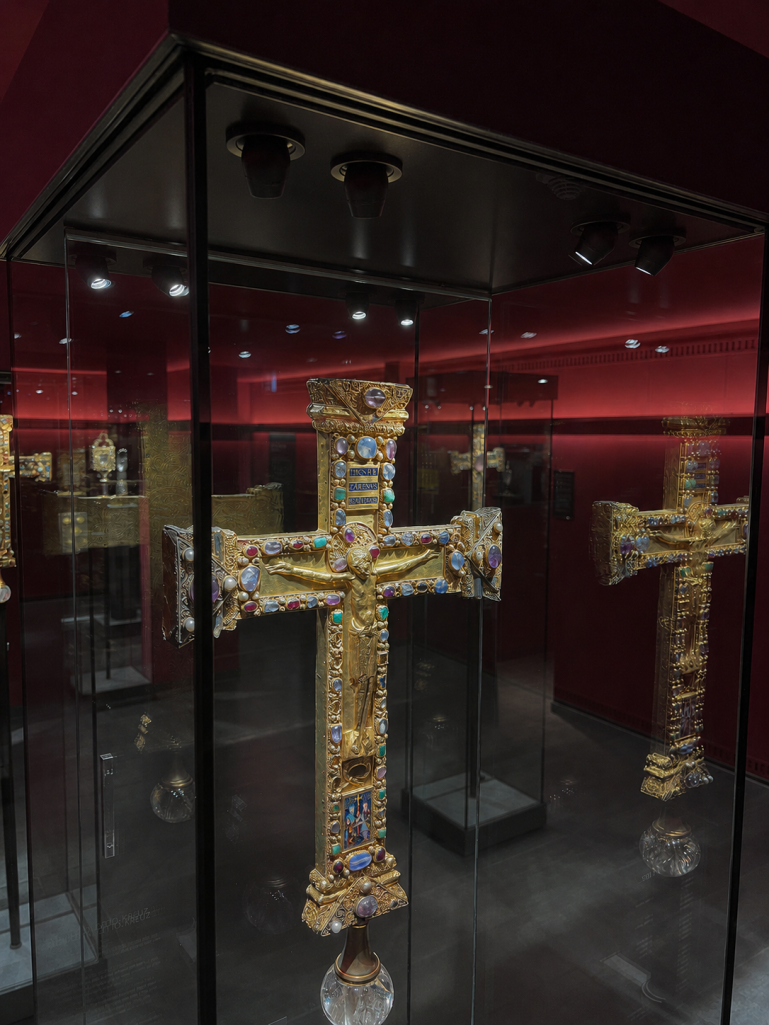
The Essen works of art dating from the 10th and 11th centuries constitute the world’s most important collection of Ottonian and Salian goldsmiths’ work.
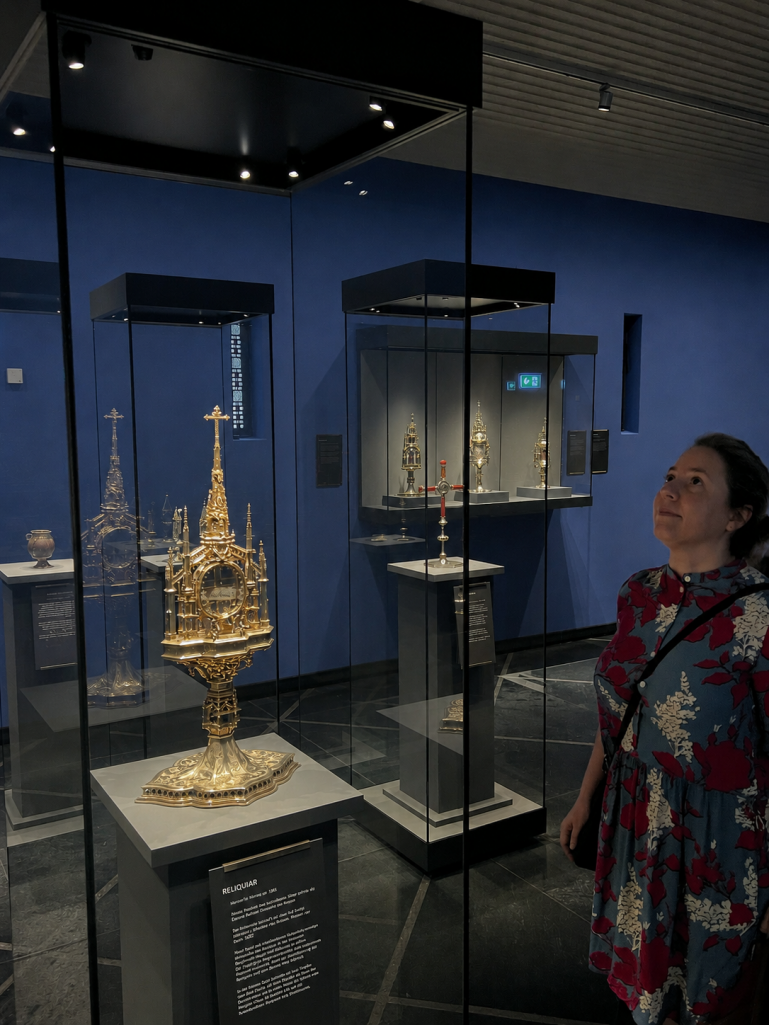
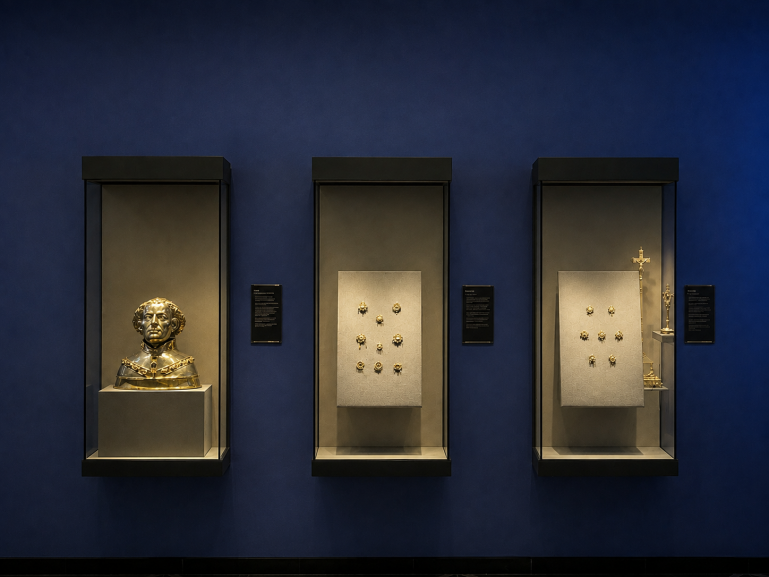
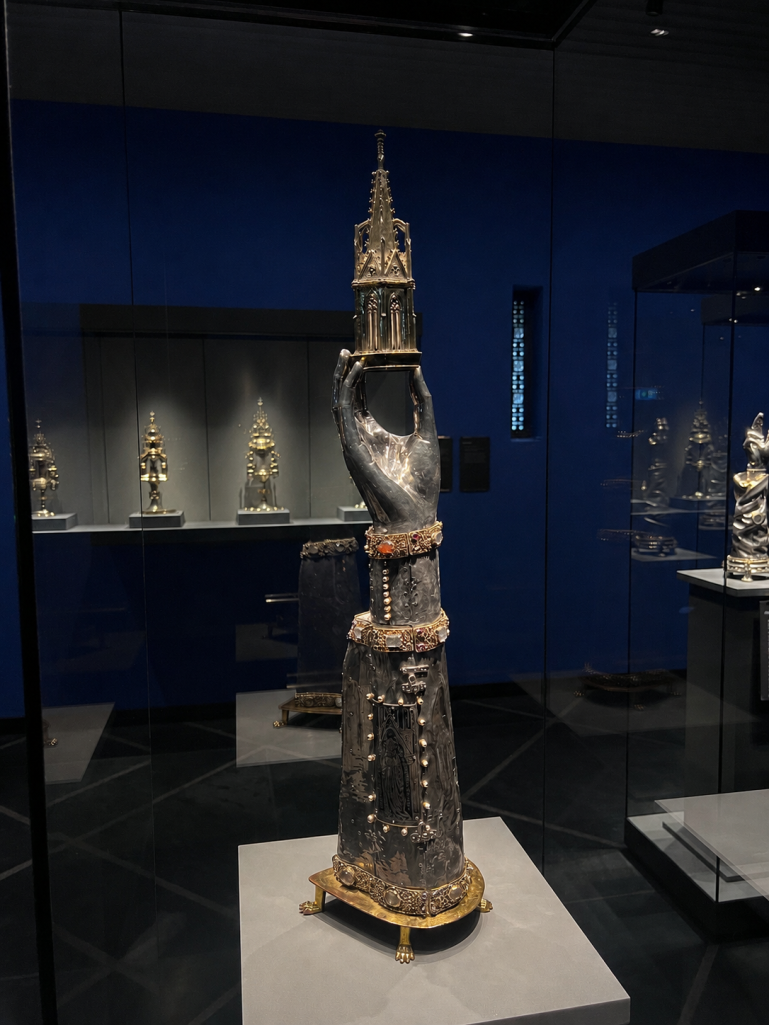
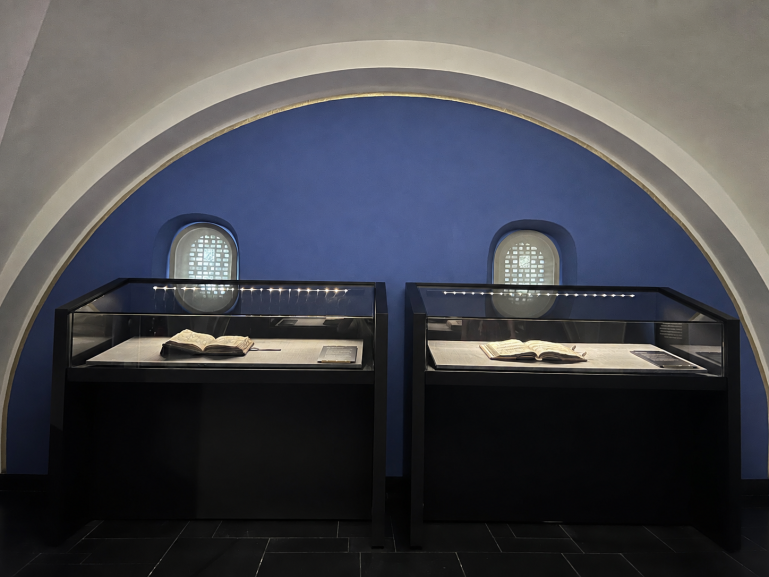
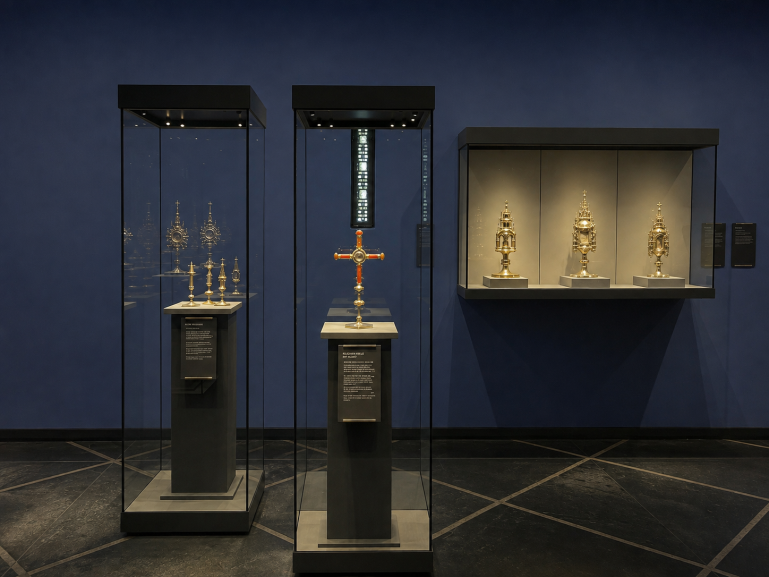
Equally unique is the Cathedral Treasury’s collection of approximately 30 Gothic works of art: reliquaries, crosses, monstrances, chalices and manuscripts, as well as enamelled brooches dating from around 1400. These objects were created between the 13th and 15th centuries following the Gothic reconstruction of the church and bear witness to the women’s foundation’s second, long period of prosperity during the Late Middle Ages.
Visitors can expect sacred works of great beauty and perfection, created for the glory of God. Some of the liturgical objects are still used in services at Essen Cathedral today.
In 2025/2026, the Essen Cathedral Treasury underwent extensive renovation, including the conversion of its lighting system from halogen technology to modern LED lighting—a comprehensive relighting project. As in many other museums, the existing halogen lighting was affected by the EU lamp ban and could no longer be operated because replacement lamps were no longer available. Furthermore, the energy consumption of this outdated lighting technology no longer met modern standards.
KOBER LICHTPLANER and cathedral architect Ralf Meyers had already collaborated successfully on other projects. The lighting designers were therefore involved from the outset to ensure that the new lighting concept was coordinated with the Treasury’s new spatial and colour scheme.
The following specifications were defined as the basis for the lighting design:
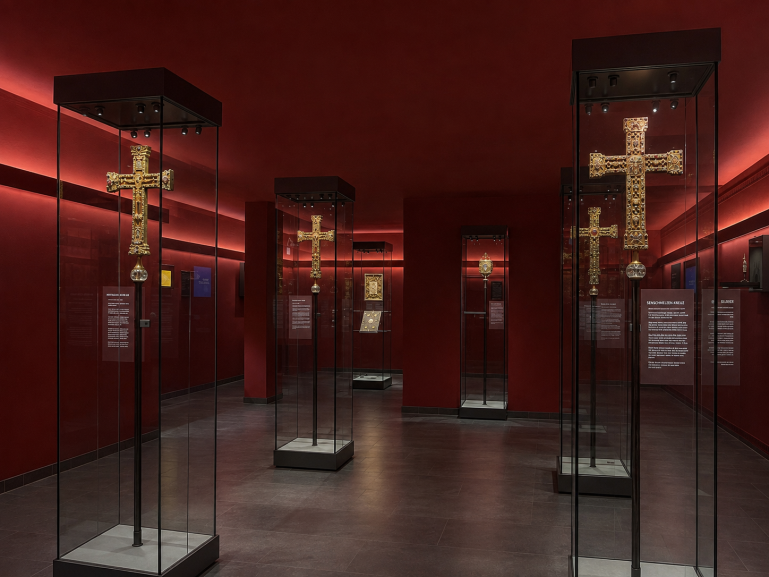
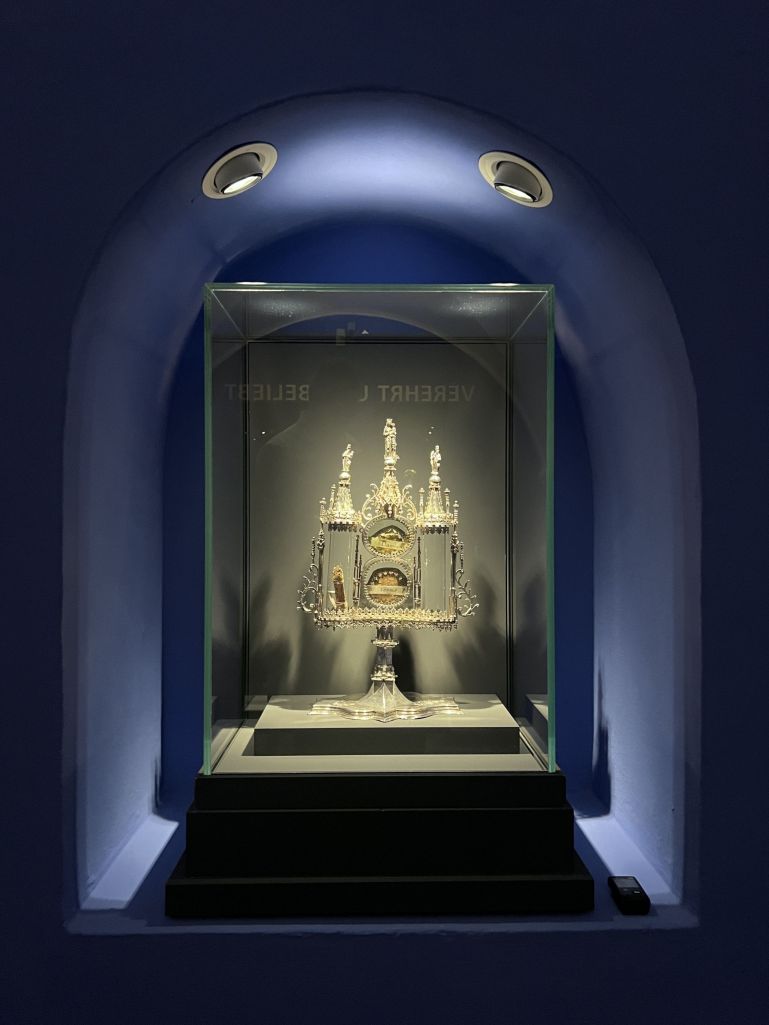
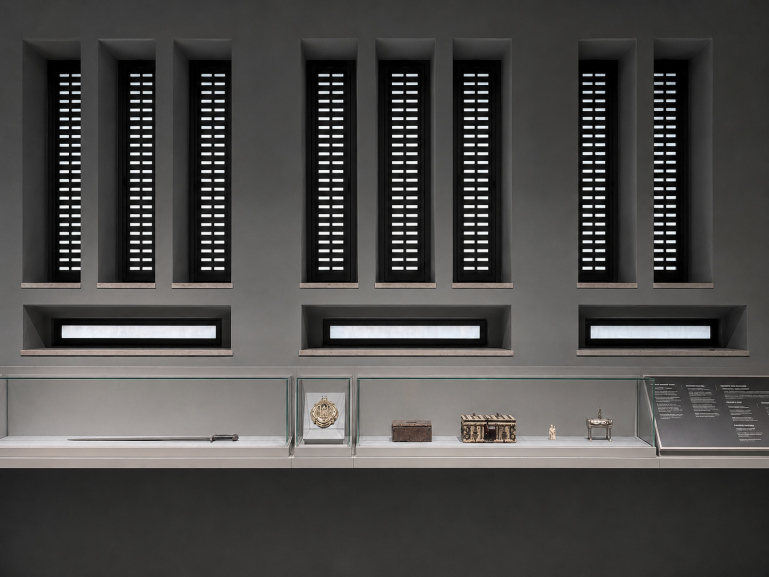
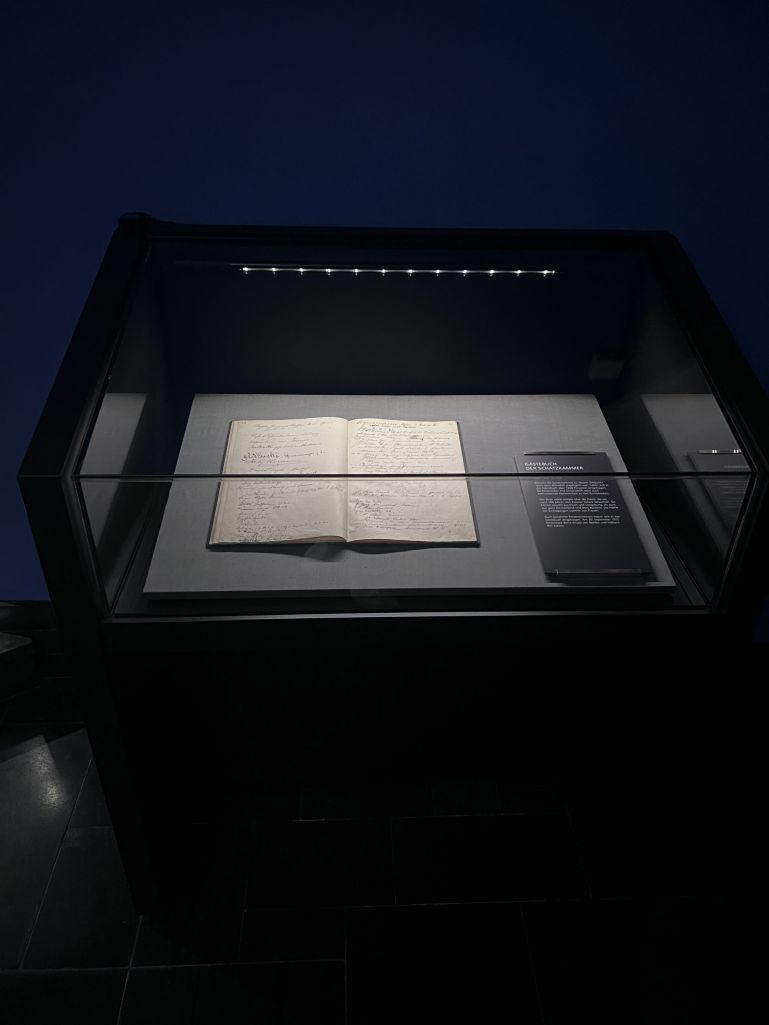
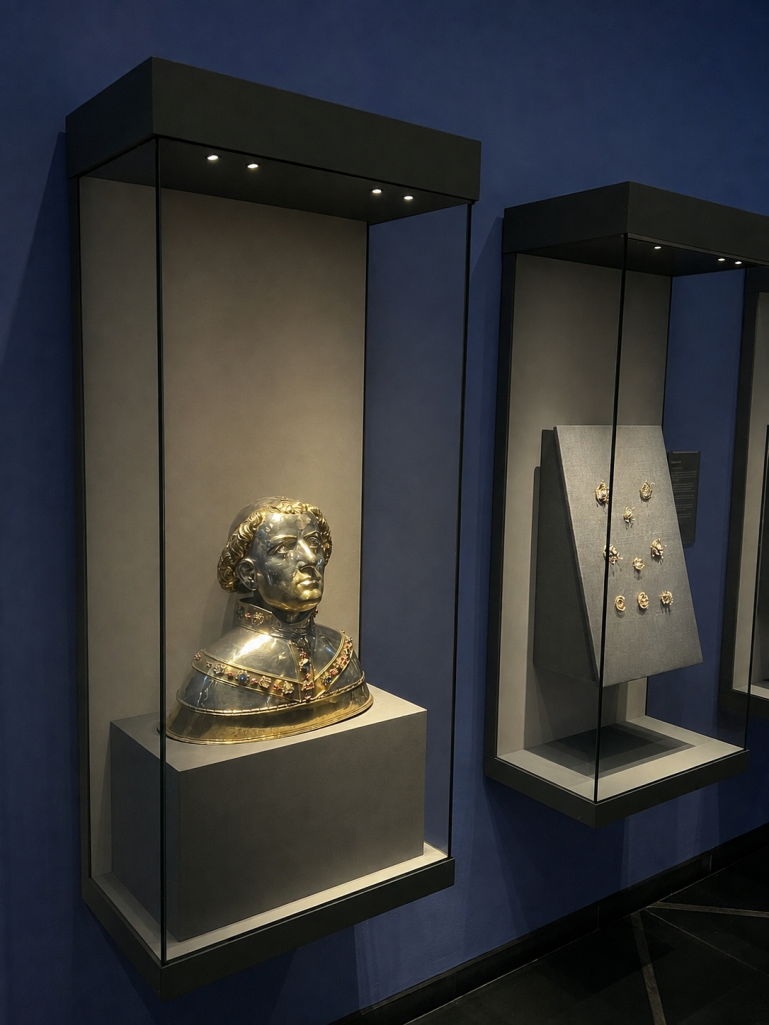
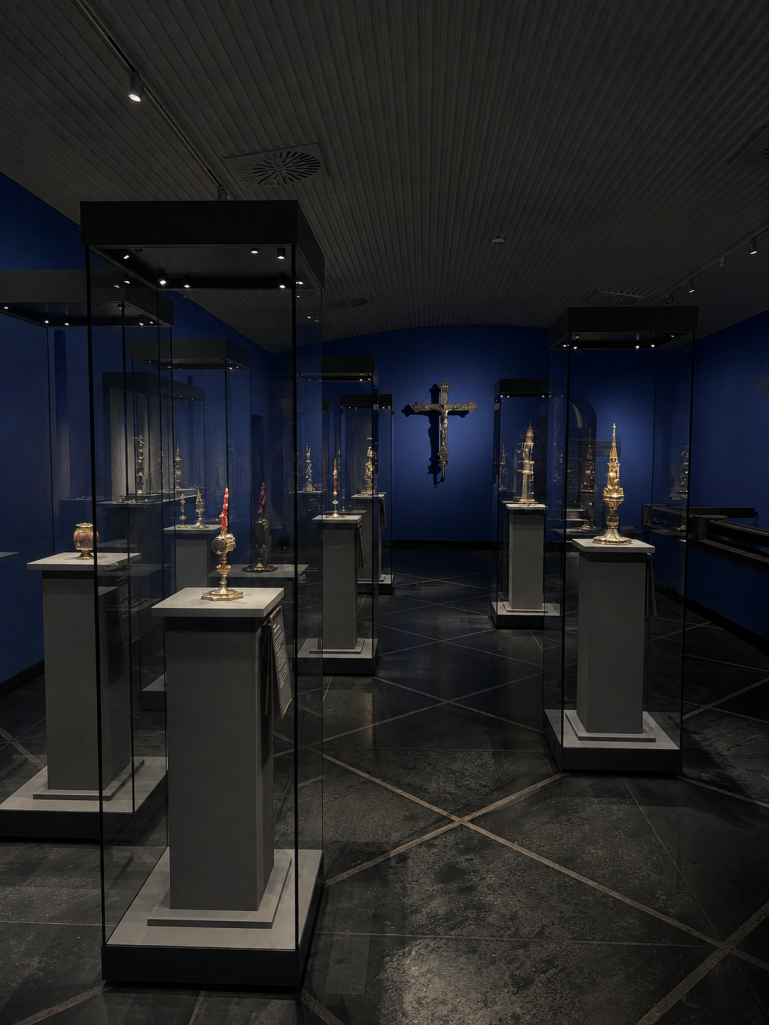
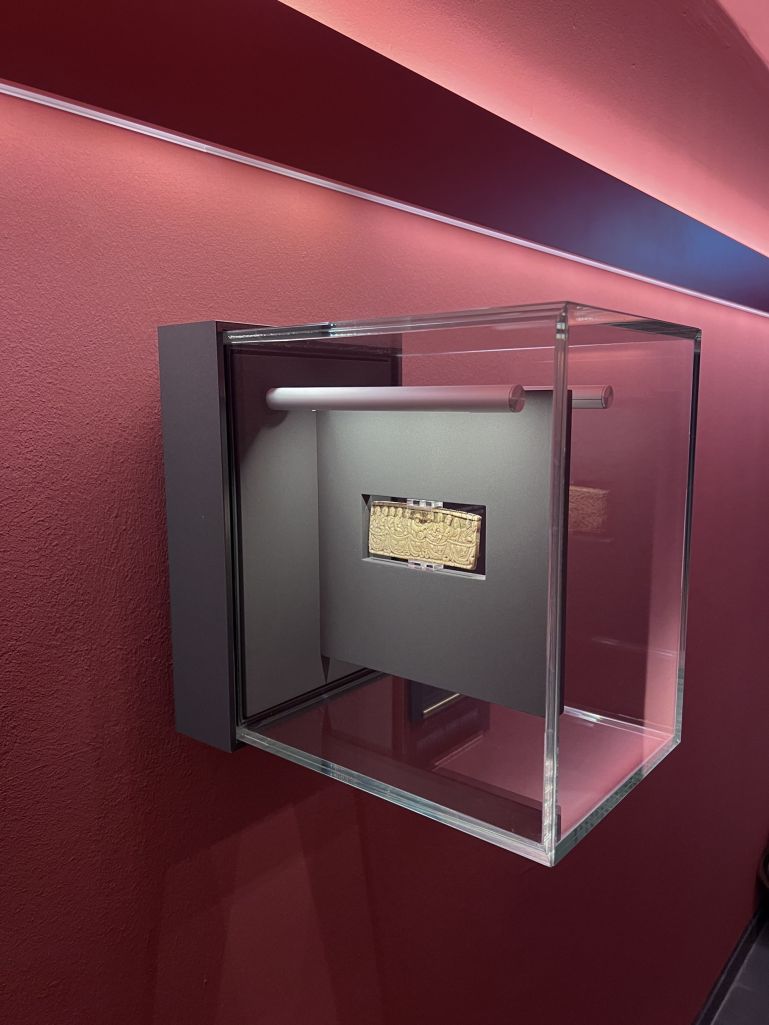
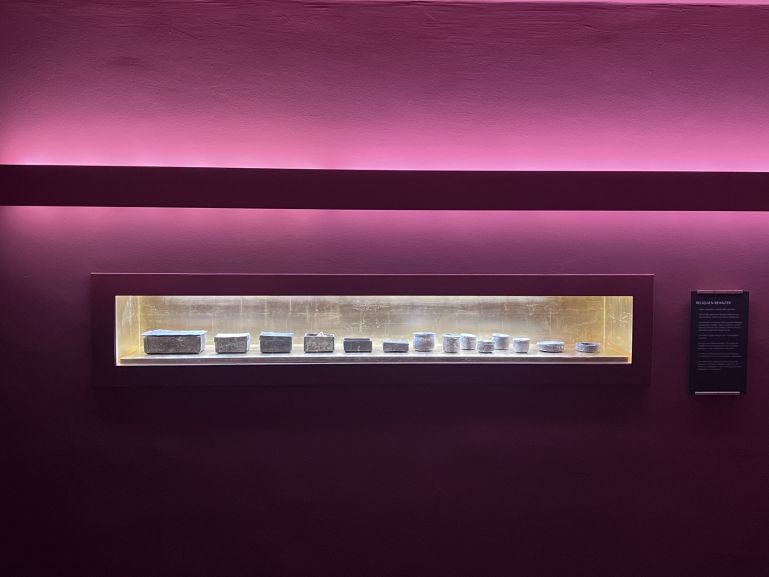
High Contrast: High levels of contrast—with a ratio of at least 1:10 between the exhibits and the ambient lighting—place the exhibits centre stage while allowing the rooms themselves to recede into the background. Only luminaires using lens technology were employed, enabling the light to be directed precisely onto the intended target surfaces without unwanted spill light.
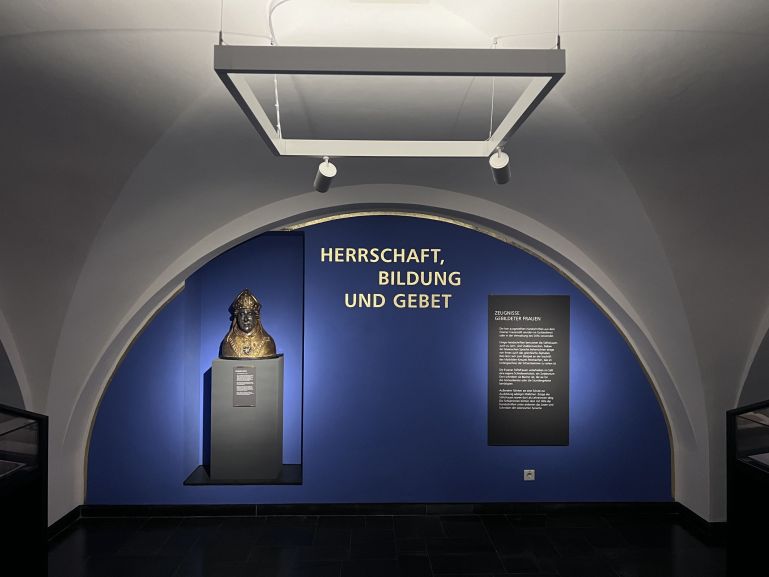
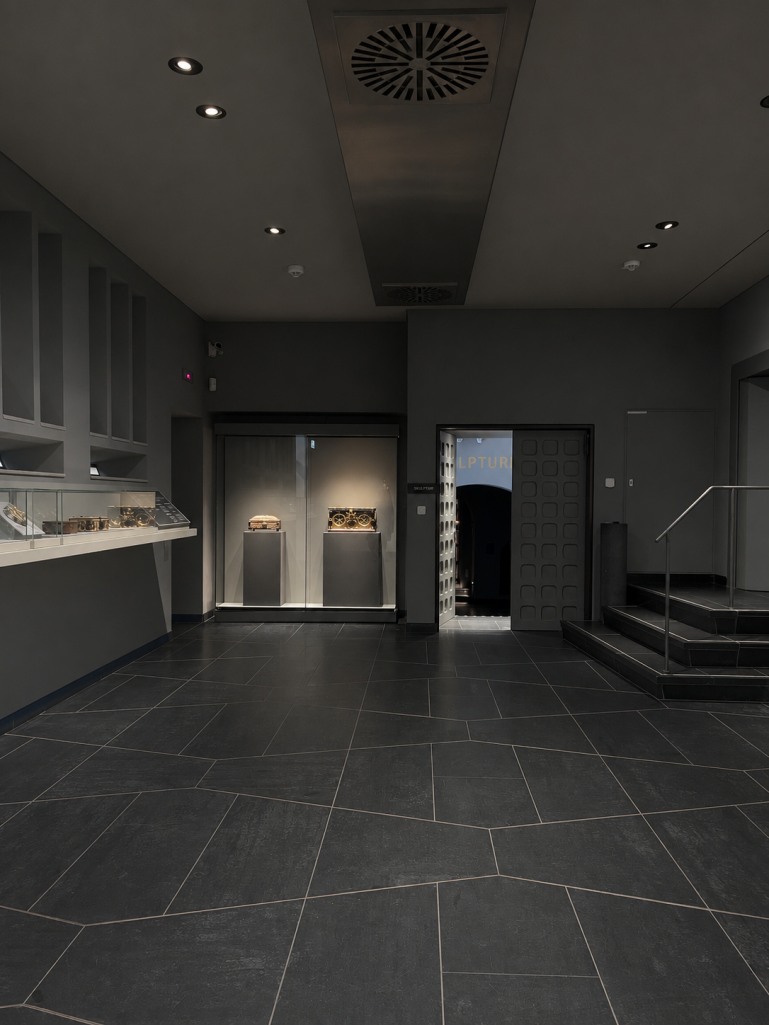
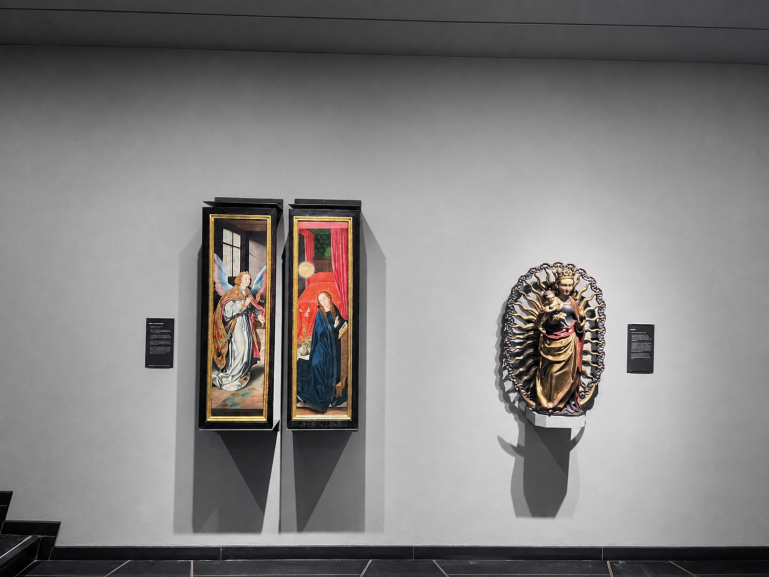
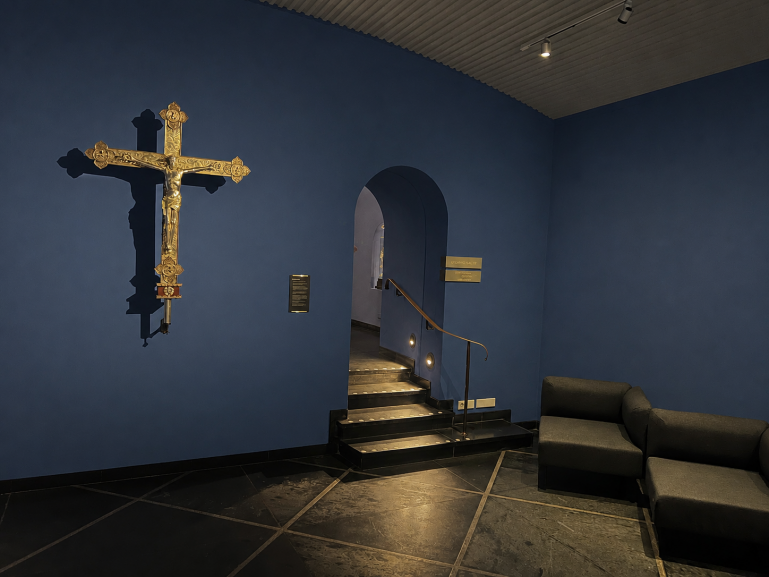
Wallwashing: Wherever possible, the walls are illuminated evenly and discreetly by targeted wallwashing in addition to the lighting of the exhibits. Illuminance on the walls is limited to a maximum of 50 lux. The lighting therefore helps define the space while remaining clearly subordinate to the exhibits within the intended visual hierarchy. Despite the low general lighting level, the wallwashing facilitates orientation within the rooms and subtly defines their boundaries.
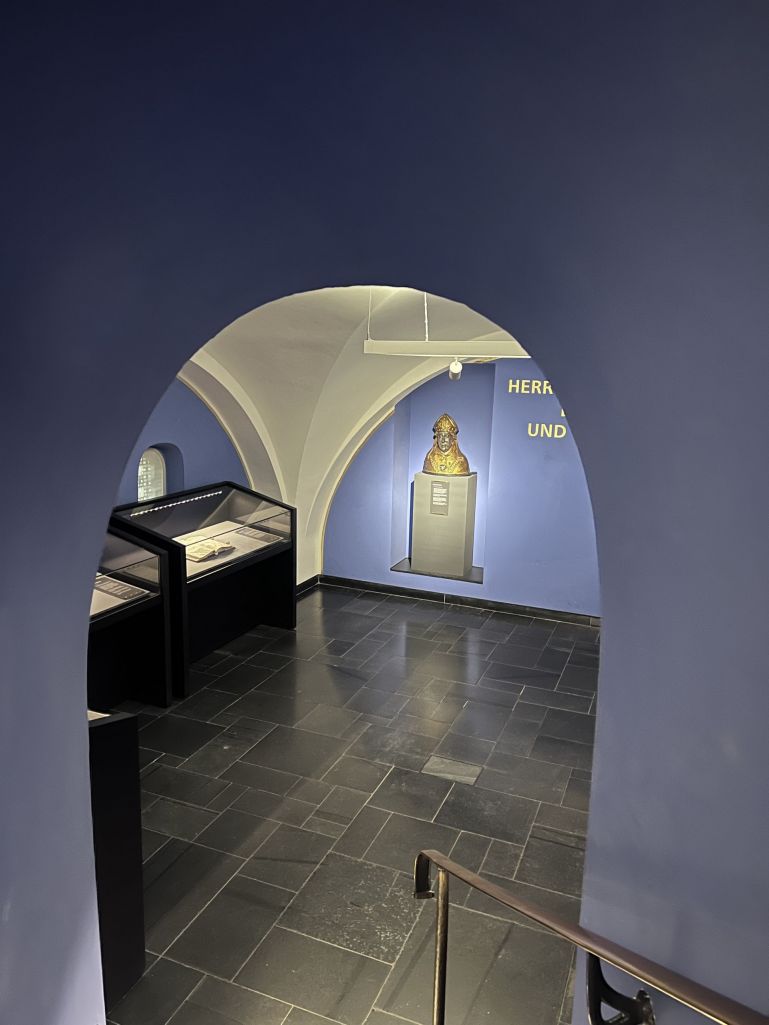
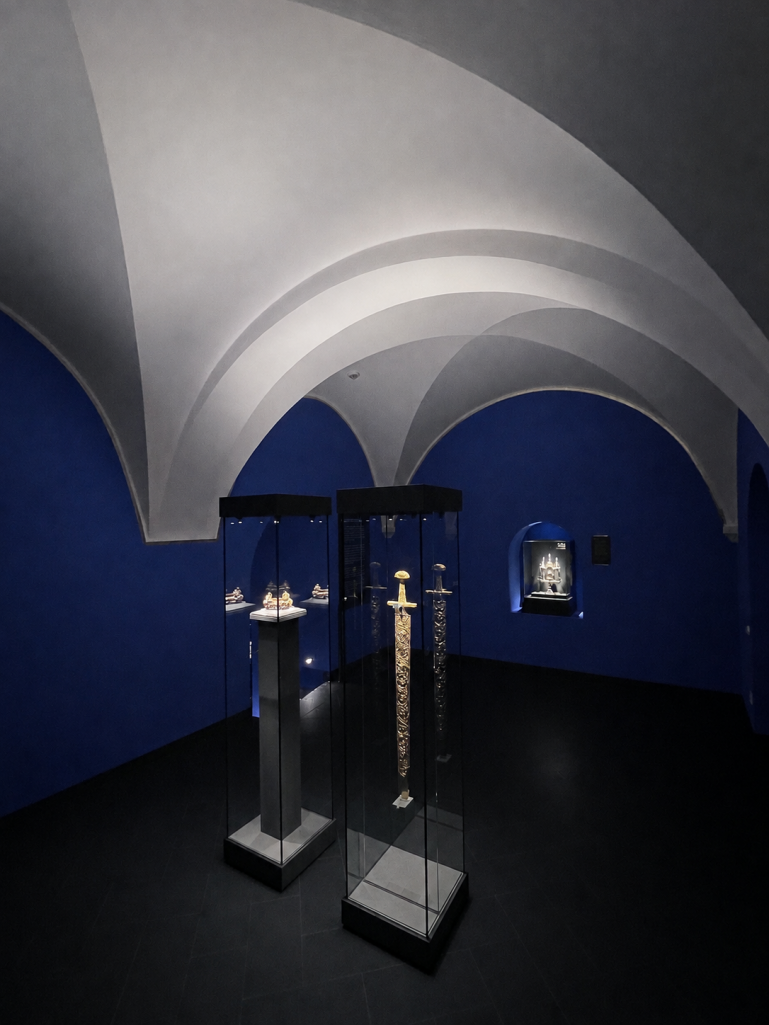
Ceiling Washing: In the vaulted areas, the ambient lighting is provided by ceiling washing. In some places, this was deliberately designed as grazing light to emphasise the sculptural quality of the historic vaulted structure.
Brilliance: The lighting of a treasury depends on brilliance. The exhibits should appear three-dimensional, while the precious metals and gemstones should “sparkle”. To achieve this effect, spotlights with the narrowest possible beams and precision lens technology were used instead of diffuse reflector-based spotlights. The precision lighting technology and excellent glare control also prevent unwanted glare.
LED Technology—Colour Rendering and Material Colours: Only LED luminaires with a CRI of 92 or higher were used. The colour temperature of the exhibit lighting is determined by the colour spectrum of the exhibits themselves: 3,000 K for gold, copper, bronze and gemstones in the reddish colour range, and 3,500 K for platinum, silver and gemstones in the bluish colour range.
LED Technology—Colour Consistency and the Black-Body Curve: An upper limit of 2 SDCM (Standard Deviation of Colour Matching) was specified for colour consistency. This is particularly important for wallwashing, as greater variations in chromaticity would be visible on the walls. Human visual perception distinguishes variations more precisely on vertical surfaces than on horizontal ones. When selecting the luminaires, care was also taken to ensure that the LEDs used at the specified colour temperatures were located as close as possible to, or directly on, the Planckian locus, also known as the black-body curve.
LED Technology—Damage Factor: Clear upper limits were defined for the damage factor of the LEDs, particularly for exhibits made from textiles and paper. The damage factor was calculated for each application and adjusted where necessary by means of dimming or sensors.
Display Cases: In close cooperation with the display-case manufacturer, the conversion of the existing cases was coordinated so that the modern LED lighting technology, including its control gear, could be installed as unobtrusively as possible. At the same time, ideal positions were defined for the display-case spotlights. Each of the different types of display case was evaluated using a full-scale 1:1 mock-up before being approved for production.
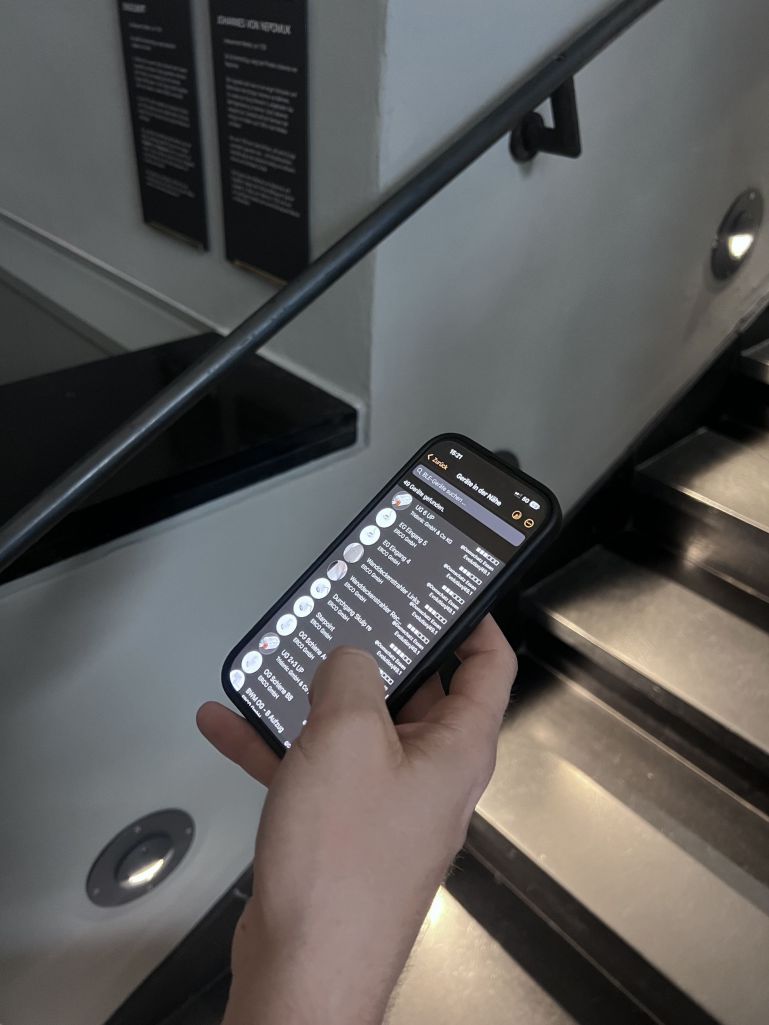
Wireless Lighting Control: Because the existing wiring in the Cathedral Treasury did not include control lines, it was unsuitable for a standard DALI lighting-control system. Installing new five-core cables would not have been feasible at a reasonable cost. A wireless, Bluetooth-based lighting-control system was therefore designed for the project.
Custom Luminaires: The project required special lighting solutions, particularly because of the very low ceiling heights on the lower floor. We developed and tested custom luminaires for these areas. In some cases, the colours of the linear wall luminaires were matched directly to the wall colours, allowing the luminaires themselves to recede even further into the background.
The quality of a lighting project is established during the design process—and especially during the final focusing and commissioning of the lighting. As with many of our museum projects, we were also responsible for aiming each individual luminaire and configuring the lighting scenes and dimming levels. This ensured that the design concept was faithfully translated into reality.
The result of this work is beautifully summarised in a statement by Andrea Wegener and Daniela Krupp, the directors of the Cathedral Treasury: “Our treasury is presented in a new splendour.”
The designers at KOBER LICHTPLANER are proud to have made a small contribution to this achievement.
Photograph copyright: KOBER LICHTPLANER GmbH
We use cookies to provide you with the best possible experience. You can find more information about cookies in our Data Protection Declaration