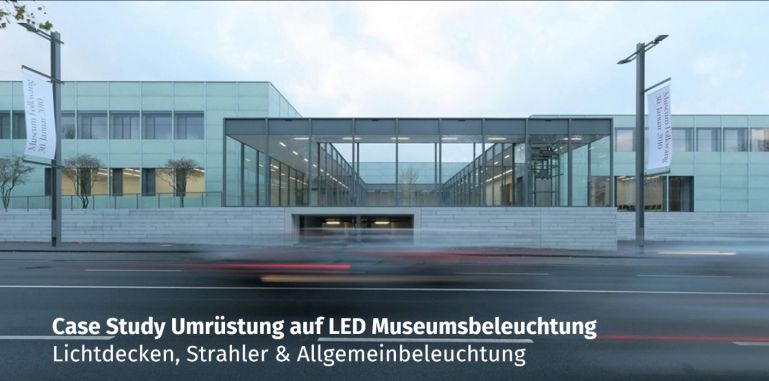
Museum Folkwang LED-Relighting, Essen
Case Study: Conversion to sustainable LED lighting
Category: Arts & Culture, Specials
Category: Arts & Culture, Specials
LED daylight ceilings, exhibition & general lighting in the museum - The Art of Lighting Art
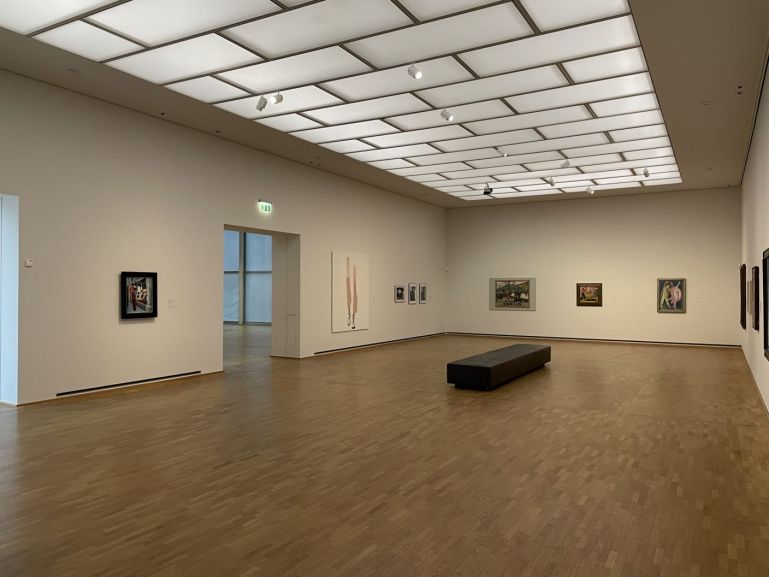
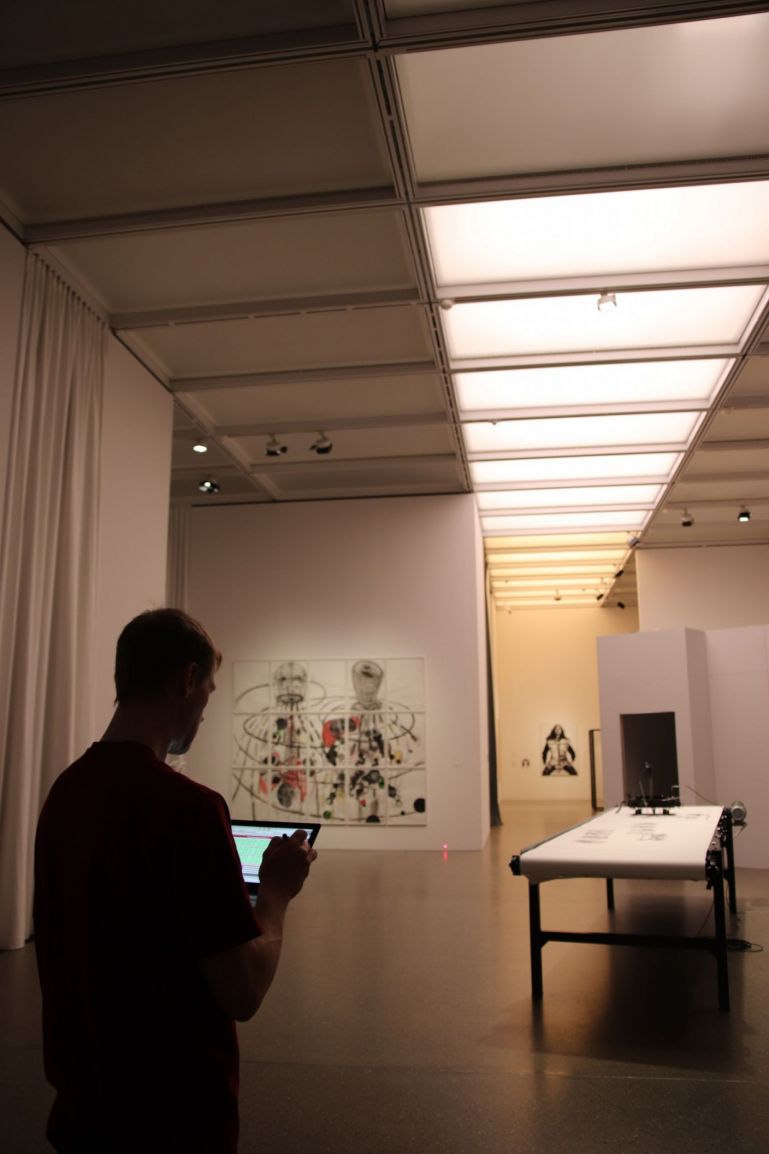
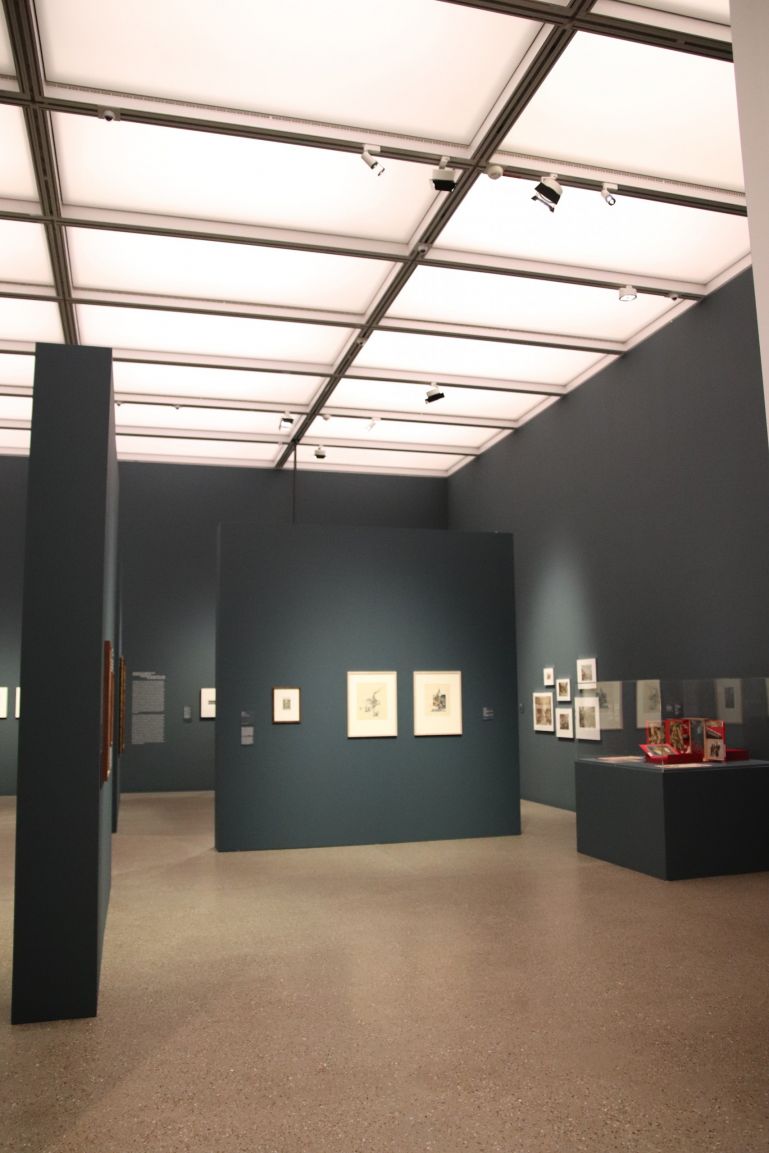
In this re-lighting project, the engineers and lighting planners from KOBER LICHTPLANER advised the renowned Folkwang Museum in Essen on the conversion to sustainable daylight ceilings with state-of-the-art LED technology (approx. 1,400 sqm), new spotlights and wall washers for exhibition lighting, and the replacement of general lighting. Lamp bans (T5, T8, T16, T26 fluorescent lamps, QT12 low-voltage lamps) and rising energy prices currently pose major challenges for many museums and create a demand for advice on renovating lighting systems. In museums, in addition to energy efficiency, lighting quality must be carefully planned, for instance with regard to color rendering or conservation-related damage factors. Funding programs can help offset the costs of new lighting. At Museum Folkwang, after the inventory analysis, the museum’s requirements for the new LED museum lighting were systematically developed:
Daylight Ceiling: Visual Spatial Effect
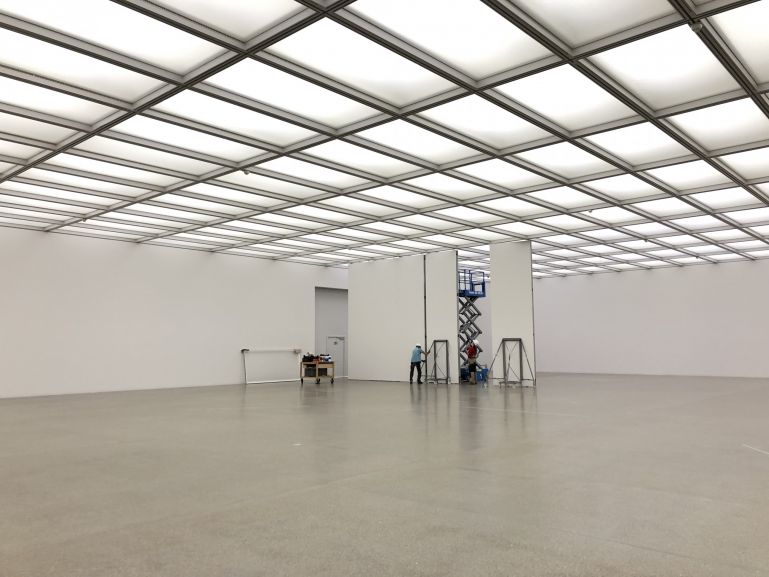
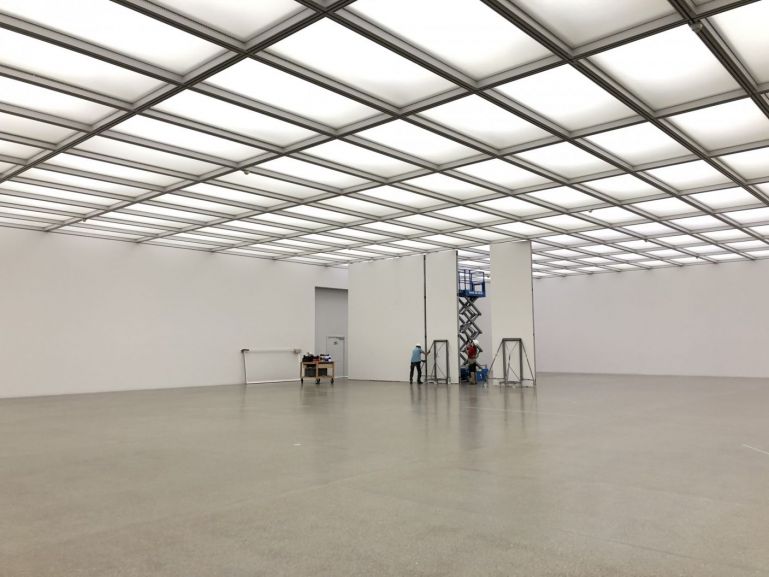
The homogeneous, even, and soft lighting effect of the existing daylight ceiling with fluorescent lamps should be preserved. In addition, the new LED light ceilings should provide significantly less visibility of the lighting system's technical components above the finishing gauze, thereby harmonizing the interplay of daylight and artificial light. For this purpose, various positions for the optimal mounting location and the emission direction of the new LED light lines were structurally and lighting-wise simulated, and different gauze materials were tested as the finish of the light ceiling to achieve an optimal balance between minimal visibility and the required lighting effect.
Daylight Ceiling: Light Color
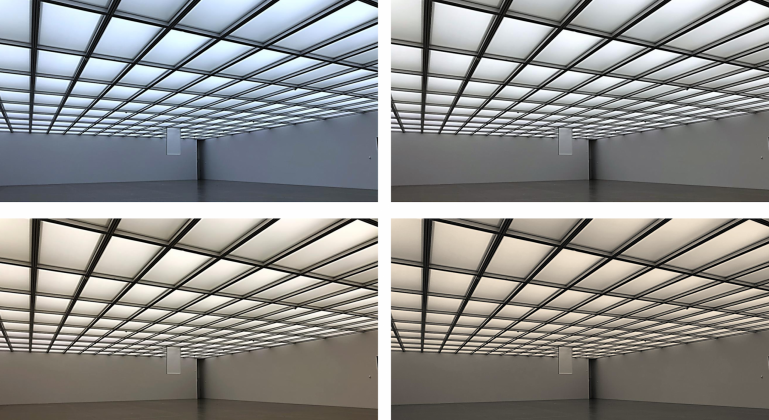
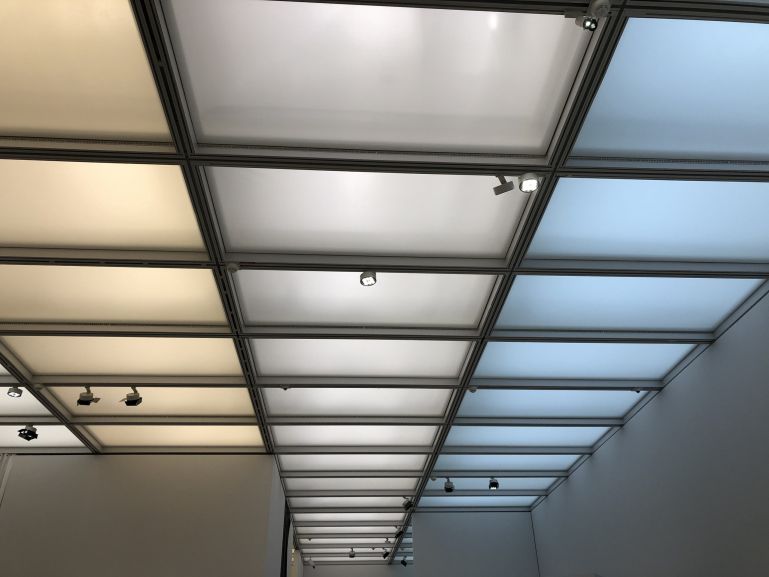
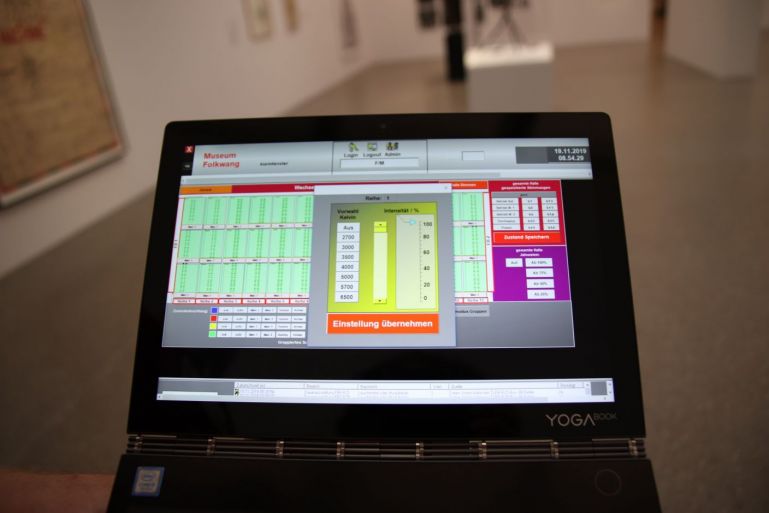
The previous daylight ceiling had a limited adjustable range of light color from 3,000–4,500 Kelvin. The new LED system should allow for a stepless adjustment from 2,700K (very warm light) to 6,500K (cool daylight). This gives curators the freedom to, for example, present an exhibition in defined daylight regardless of the time of day by programming a daylight sequence in which brightness and color temperature are adjusted, or to maintain a constant daylight atmosphere in open ceiling sheds. The LED color temperature can thus be optimally adapted to the displayed art, and in terms of perception psychology, brightness and light color can be coordinated.
Daylight Ceiling: Light Quality & Conservation UV/IR Damage Factor
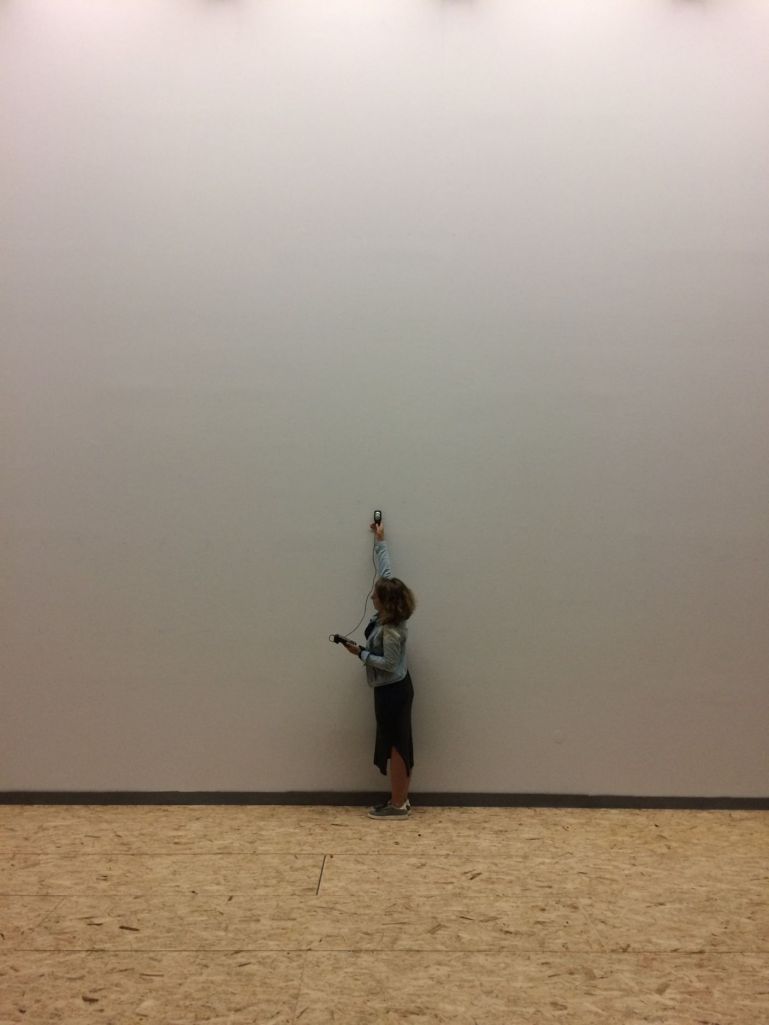
The goal was to achieve very high color rendering across the adjustable color temperature spectrum with the new technology. Based on the CRI-14 colors, photometric measurements were carried out in 500K steps, resulting in a CRI consistently above 93. At the same time, the UV and IR damage factors were reduced from a conservation perspective compared to the previous solution. In addition to the classic calculation and measurement of illuminance, the color rendering and color temperature of the installed system were checked using a spectrometer.
Daylight Ceiling: Illuminance Levels
A stepless digital dimming of the light ceiling was implemented using DALI with a minimum dimming level of 1%, allowing the illuminance levels to be scenographically reduced to as low as 50 lx on the floor and 30 lx on the walls.
Daylight Ceiling: Heat Generation & Energy Efficiency
Analog light sources, due to their poor efficiency, contribute a significant portion of the heat load in air-conditioned rooms. As a rule of thumb, a ratio of 1:2 is often needed between the power consumption of analog lighting and the required energy for room air conditioning – consequently, for every 1 watt of saved lighting power, about 2 watts of energy savings for air conditioning can be achieved. By switching to modern, efficient LED lighting, not only does the energy consumption of the lighting itself decrease, but the energy consumption for cooling decreases disproportionately due to the lower heat load. Thanks to the targeted and less diffuse emission of the new LED light sources, the number of light sources could be significantly reduced overall, and the available light could be used more efficiently. In total, this resulted in energy savings of nearly 80%, in addition to the savings from reduced air conditioning.
Exhibition Lighting Spotlights
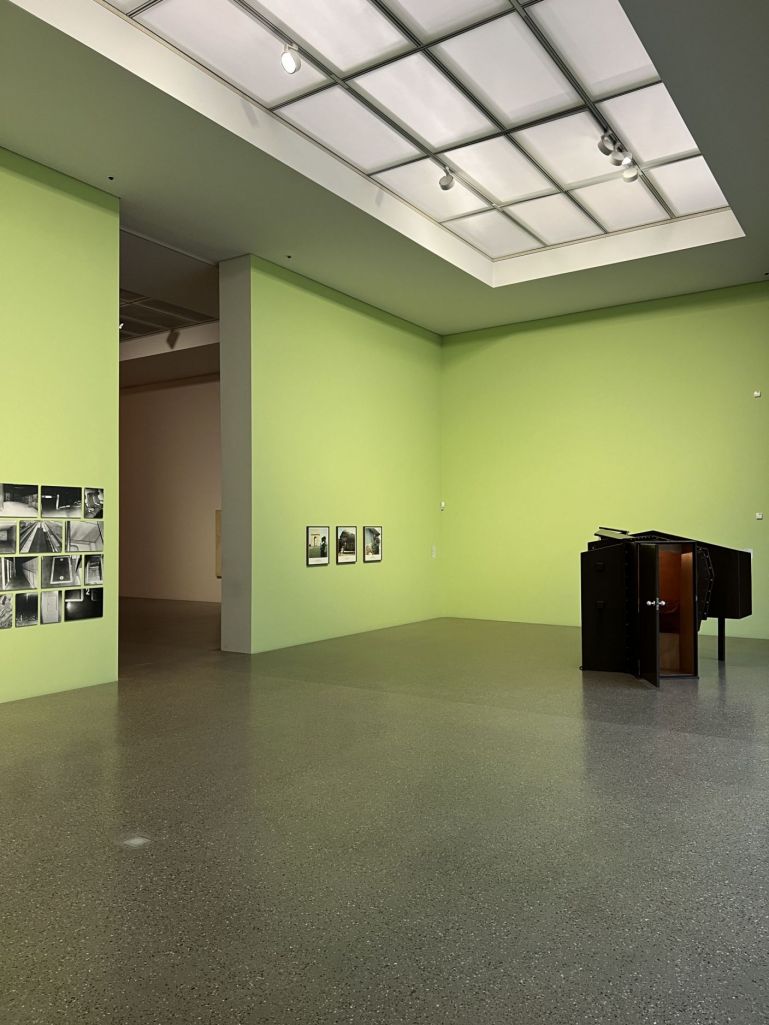
In addition to the general lighting provided by the LED ceiling, the accent lighting of the exhibits in the room or on the walls is done using spotlights. These were also converted as part of the re-lighting project from analog fixtures to sustainable LED museum spotlights. In addition to the general high requirements for the LEDs used, the specific requirements for the spotlights were developed, resulting in a design and lighting solution that is better than before. Through various samples and comparisons, spotlights were ultimately specified that, instead of conventional light guidance using reflectors, use a more efficient and glare-free projection system with high-performance polymer lenses. Interchangeable light distributions, stepless on-board dimming down to 0.1%, and extensive accessories were also part of the specification.
Exhibition lighting linear wall washers
In addition to spotlights, linear wallwashers with very high uniformity shape the museum's exhibition lighting. In combination with the light ceiling, this represents a classic 'white cube' approach. Certain areas in the basement were equipped for the first time with miniaturized, linear 48V lens wallwashers. The intermediate areas of the individual wall washer modules can each be supplemented with 48V spotlights for targeted accent lighting.
Exhibition lighting linear wall washers in the context of monument preservation
In large areas of the museum, the existing wall washers were part of the monument protection of the historic building. As a result, KOBER LICHTPLANER, together with the lighting manufacturer ERCO, specialized in museum lighting, developed an LED wall washer that is visually identical to the installed fixtures but is based on modern and energy-efficient LED lighting technology. The goal was that the replacement of the lighting would be imperceptible both in terms of hardware and lighting effect.
General lighting in the context of monument protection
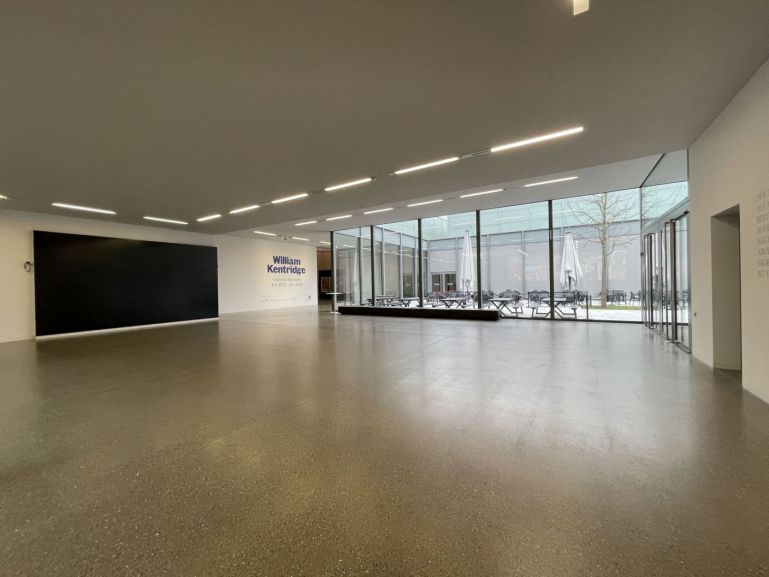
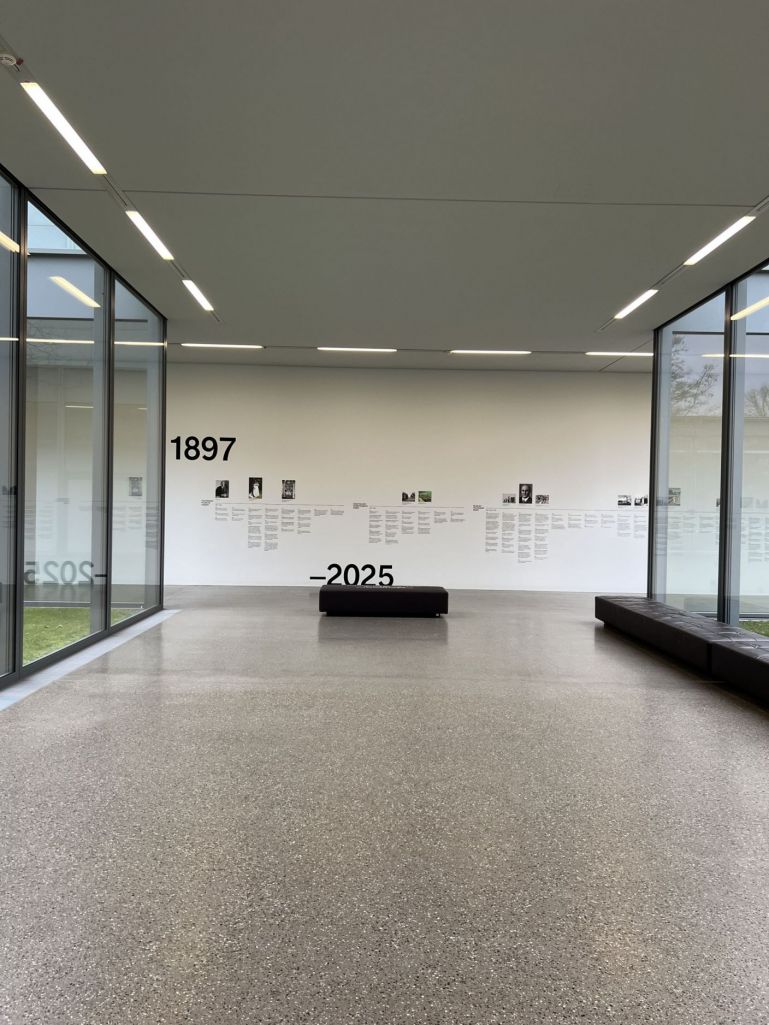
Even the replacement of general lighting in the form of round recessed ceiling lights and linear surface-mounted lights in the old building was subject to the requirements of monument protection. Similar to the wall floodlights of the exhibition lighting, individual replacement lights were designed together with ERCO, so that the appearance of the new lighting does not differ from the previous lighting – except for the now significantly reduced energy consumption, the better color rendering, and the higher brilliance of the light.
Project schedule and range of services
KOBER LICHTPLANER supervised the project for around 24 months. During this period, the following services were provided: inventory of the previous lighting, elaboration of the requirements in workshops, implementation of the requirements in lighting specifications, pre-selection of suitable lighting systems and manufacturers, extensive sampling up to the 1:1 mock-up, elaboration of specifications for special lighting development, commissioning , illumination and light scene definition.
Further Case Studies for LED Conversion in Museums:
Museum Draiflessen Collection
City Museum Münster
LED Museum Workshop
Copyrights
KOBER LICHTPLANER
Outdoor photo: Website Museum Fokwang
Spotlights images: ERCO GmbH
We use cookies to provide you with the best possible experience. You can find more information about cookies in our Data Protection Declaration